Liberation
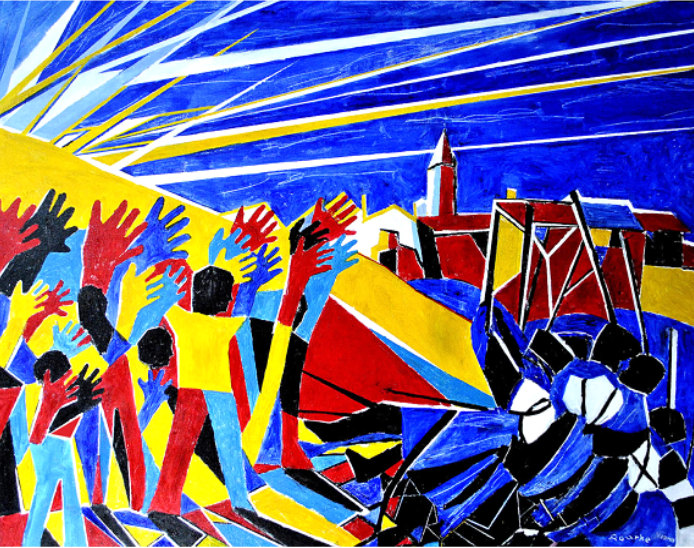
We Came, We Saw, We Conquered
30 x 40 inches
Oil on Canvas
October 2010
SOLD
Description
The title of this painting is inspired by the famous Latin phrase Veni, vidi, vici (“I came, I saw, I conquered”), attributed to Julius Caesar after his swift victory over Pharnaces II of Pontus in 47 BC.
As a Deaf artist, I was inspired by Deaf artist Mary Thornley and her painting Milan, Italy 1880, which was itself inspired by Francisco Goya’s masterpiece The Third of May 1808. This connection between artists across generations reflects how Deaf history and resistance continue to inspire new artistic voices.
I created this painting to celebrate the Deaf community’s symbolic victory over the legacy of the infamous 1880 Milan Congress. For more than 130 years, Deaf people around the world endured the consequences of the Congress’s resolutions, which promoted oralism and marginalized sign languages. Countless Deaf individuals suffered under these policies and never lived to witness their rejection.
In July 2010, at the International Congress on Education of the Deaf 2010 in Vancouver, Canada, the organization formally expressed regret and rejected the eight resolutions adopted at the Milan Congress of 1880. For many in the Deaf community, this marked the beginning of a new era—a long-awaited acknowledgment of the harm caused by those historic decisions.
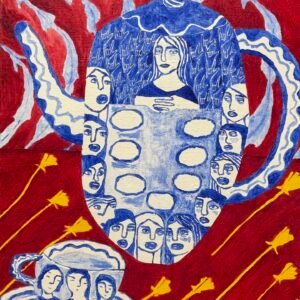
The painting portrays waves of raised hands—the Deaf community’s visual applause and symbol of unity—overcoming the defeated soldiers of oralism. The once-powerful forces of oppression have fallen, while the collective strength of Deaf people rises in celebration.
In the background, the first light of dawn breaks across the horizon. The rising sun symbolizes hope, renewal, and the beginning of a new chapter in Deaf history. After 130 years of struggle, the Deaf community emerges not only with resilience but with a renewed sense of pride, recognition, and empowerment.
We Came, We Saw, We Conquered celebrates perseverance, justice, and the triumph of Deaf people whose language, culture, and identity have endured despite generations of oppression.
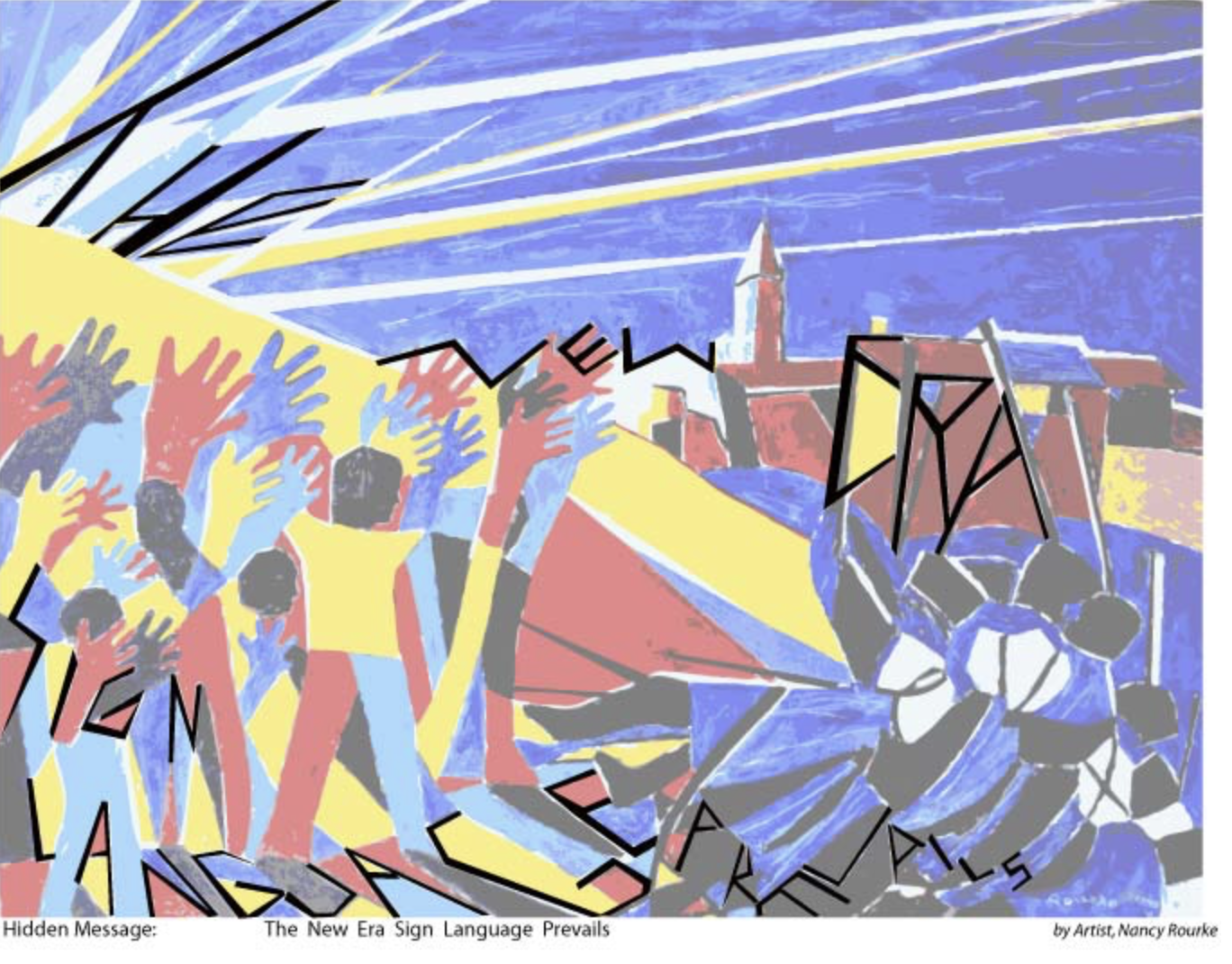
There is a hidden message in the painting.
Reviews
There are no reviews yet.